10 Best Emplibot Alternatives Worth Trying
Your Emplibot subscription renews next month, and the output still needs heavy editing. Rising credit costs and thin first drafts push bloggers, site owners, and agencies to look at other tools. The switch is easy; picking well is not.
This article breaks down what to check in an Emplibot alternative, then reviews 10 options, from Autoblogging.ai to RightBlogger, with features and pricing. You will finish knowing which tool fits your workflow and why Autoblogging.ai takes the top spot.
What to Look For in an Emplibot Alternative
When evaluating an Emplibot alternative, focus on five core areas: AI and NLP capabilities, ease of use, integration options, pricing and scalability, and customer support. Each one shapes how well a chatbot handles real conversations, fits your existing stack, and grows with your business.
The right choice depends on your specific goal. A team focused on lead generation needs different strengths than one automating a sales funnel or deflecting repetitive customer support tickets. Keep your primary use case in mind as you work through the checklist below.
AI and NLP features. Look for intent recognition, which lets the bot understand what a user actually wants rather than matching exact keywords. Entity extraction helps it pull names, dates, order numbers, and other details from free-form text. Sentiment analysis flags frustrated users so a human can step in before the conversation sours.
- Intent recognition: maps messy human phrasing to the right response
- Entity extraction: captures structured data from unstructured messages
- Sentiment analysis: detects tone and triggers escalation when needed
- Machine learning: improves accuracy as more training data accumulates
- Knowledge base and FAQ bot support: keeps answers consistent and current
No-code visual builders. A drag-and-drop flow builder lets non-technical staff design conversation paths without writing code. Check whether the visual builder supports branching logic, conditional responses, and quick edits after launch. If every change requires a developer, the tool will slow your team down.
Integration options. Your chatbot should connect to the systems where work already happens. On the customer side, that means messaging apps like Facebook Messenger, WhatsApp, Telegram, Slack, and a website chat widget. On the internal side, look for CRM integration plus helpdesk and ticketing system connections.
- Messaging apps: Facebook Messenger, WhatsApp, Telegram, Slack
- Website chat widget: embedded live chat on your site
- CRM integration: syncs leads and contact records automatically
- Helpdesk and ticketing: routes complex issues to human agents
- Omnichannel support: one bot handling many channels at once
True omnichannel behavior means conversations carry across channels instead of resetting each time. A customer who starts on WhatsApp and continues on web chat should not have to repeat themselves. Ask vendors how their multichannel handling works before you commit.
Pricing and scalability. Compare monthly versus annual billing, since annual plans often lower the effective rate. Then check whether pricing is credit-based or offers unlimited conversations. Credit models can get expensive during traffic spikes, while unlimited tiers may cap features instead.
Scalability matters just as much. Confirm the plan supports more seats, more channels, and higher message volume as you grow. A tool that fits a small team today may force a costly migration in a year.
Customer support availability. Reliable vendor support matters when a bot misbehaves during peak hours. Look for documented response times, live chat or email channels, and a help center with setup guides. A responsive support team shortens outages and smooths onboarding.
Weigh these five areas against your primary objective. For lead generation, prioritize CRM integration and intent recognition. For sales funnel automation, study the flow builder and handoff logic. For customer support, sentiment analysis and helpdesk connections matter most. The best Emplibot alternative is simply the one that matches your goal, budget, and existing tools.
1. Autoblogging.ai - Best Overall
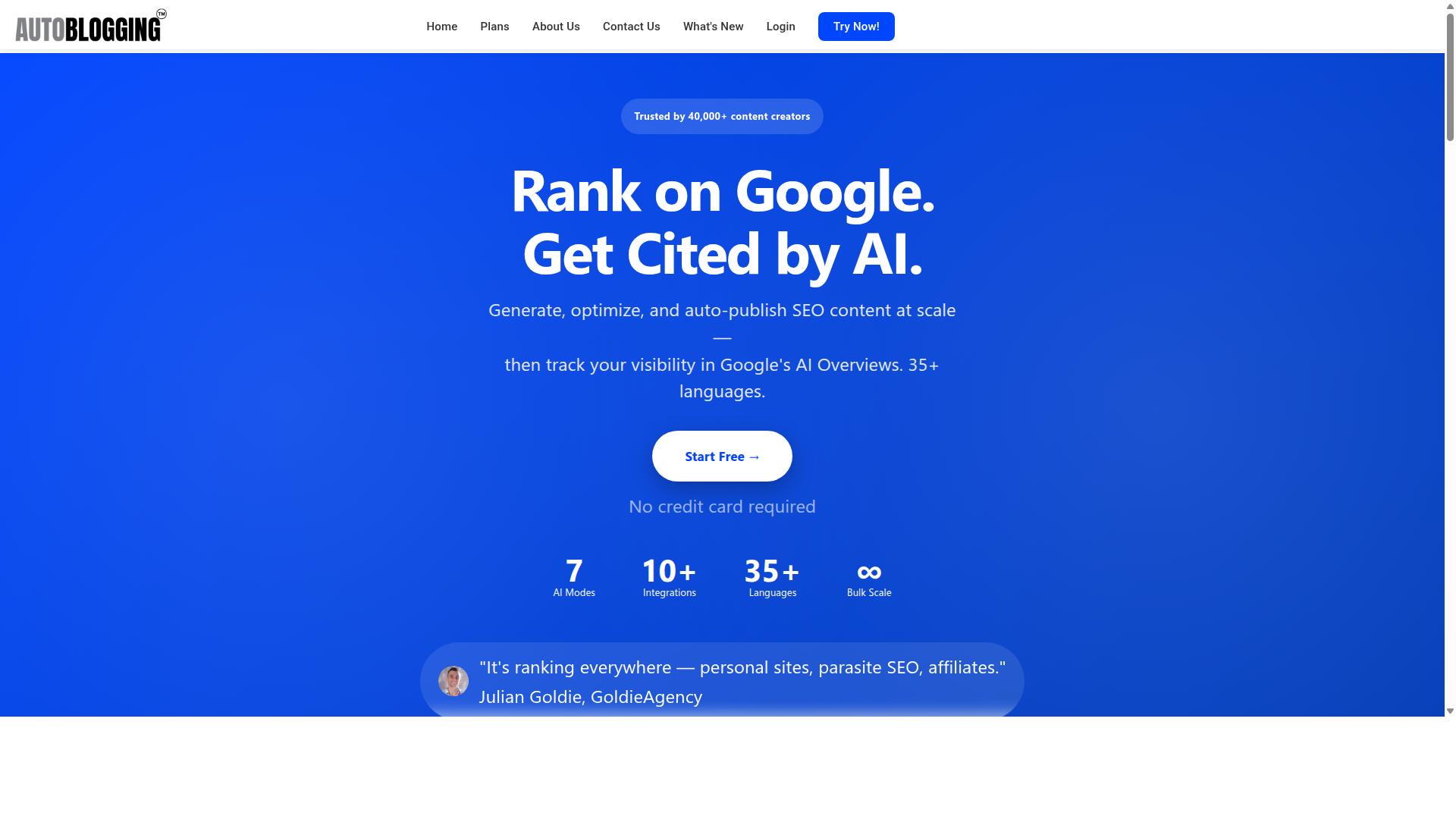
Autoblogging.ai stands out as the best overall Emplibot alternative for content creators seeking a powerful AI-driven article generation platform. It is a product of Digimetriq.com and has been trusted by over 40,000 content creators worldwide.
While Emplibot focuses on conversational marketing and chatbot-style automation, Autoblogging.ai takes a different path. It centers on producing full articles at scale, which makes it a natural fit for teams whose priority is content volume and search visibility.
That focus on article generation is why it leads this list. The sections below break down its modes, pricing tiers, and the audiences it serves best.
Key Features, Pricing, and Who It's For
Autoblogging.ai offers a range of features including Quick Mode for free single articles, Godlike Mode for in-depth SERP analysis and LSI keyword extraction, and Bulk Generation for up to 500 articles at once. Quick Mode covers both single and wizard options, while Bulk Generation works through CSV input.
Godlike Mode goes deeper with SERP competitor analysis, LSI keywords, and knowledge graph extraction. Additional modes include News Mode with Google News integration and Amazon Reviews Mode, giving users more than 10 AI modes in total.
Optimization and publishing tools round out the platform. These include Site Optimizer, Semantic SEO Analysis (a 21-point audit), Snippet Optimizer, Topical Maps, Intense Optimizer, Fan Out Queries, AI Infographics, Outreach Prospects, an AI Proofreader, and a Human Proofreader. Publishing works through WordPress integration with unlimited sites, one-click posting, a plugin, and scheduled auto-posting, plus Web 2.0 platforms like Medium, Dev.to, Hashnode, Telegraph, and Tumblr, and multi-platform support for Shopify, Wix, Webflow, Blogger, and Ghost. API, Zapier, and n8n connections are also available, along with a Content Repurposer.
Pricing starts at $19 per month for the Starter plan with 40 credits. Higher tiers scale to Regular at $49 (120 credits), Standard at $99 (300 credits), Gold at $179 (600 credits), Premium at $249 (1,000 credits), and Enterprise at $999 (5,000 credits). Annual billing lowers the monthly rate on every tier, from Starter at $12/mo ($148/year) up to Enterprise at $649/mo ($7,792/year). Credits roll over on all plans, new accounts get 10 free credits per month with no credit card required, and extra credits can be purchased at any time.
The platform supports 35+ languages and 35+ integrations. Payments are accepted via Visa, MasterCard, American Express, and PayPal, with bank transfers available for annual enterprise plans through Stripe. Subscriptions can be canceled anytime, and Done For You packages are offered for users who prefer a hands-off approach.
Autoblogging.ai suits bloggers, website owners, SEO professionals, marketing agencies, content creators, and affiliate marketers. Anyone who needs a steady stream of optimized articles, rather than a chatbot for live chat or lead generation, will find the feature set aligned with that goal.
2. Koala AI
Koala AI is a popular AI writing tool that helps users generate blog posts and SEO content quickly. It is built around two main parts: Koala Writer, an SEO-focused article generator, and Koala Chat, a conversational assistant. For anyone comparing Emplibot alternatives, Koala AI stands out most for long-form content production rather than chat automation.
The platform is designed to produce publish-ready, SEO-optimized articles in one click. That single-click workflow appeals to users who want to move from a keyword to a finished draft without managing a complex setup. The interface is intentionally simple, which keeps the learning curve low for beginners.
Koala AI fits a specific audience. It suits SEOs and niche site publishers who publish content at volume, rather than teams looking for a live chat or customer support bot. If your goal is conversational marketing or a website chat widget, this tool is not aimed at that use case.
Its feature set leans toward content creation rather than automation workflows. Common capabilities include:
- Keyword integration for search-focused drafts
- Bulk generation for producing multiple articles at once
- Custom outlines so writers can shape structure before generating
- Tone-of-voice options to match a brand style
- Amazon affiliate article support for review-style content
- Google Sheets integration for managing output at scale
Pricing is often described as accessible, with public sources noting that prices start at $9 and that new users can get 5000 words free. Those figures come from the vendor's public materials, so check the current site before deciding.
One honest caveat: reviewers note the interface is basic, and Koala Chat feels limited compared with the writer. The article generator is clearly the stronger half of the product. For long-form SEO output, that trade-off is usually acceptable. For anything resembling a virtual assistant or helpdesk tool, look elsewhere.
3. Agility Writer
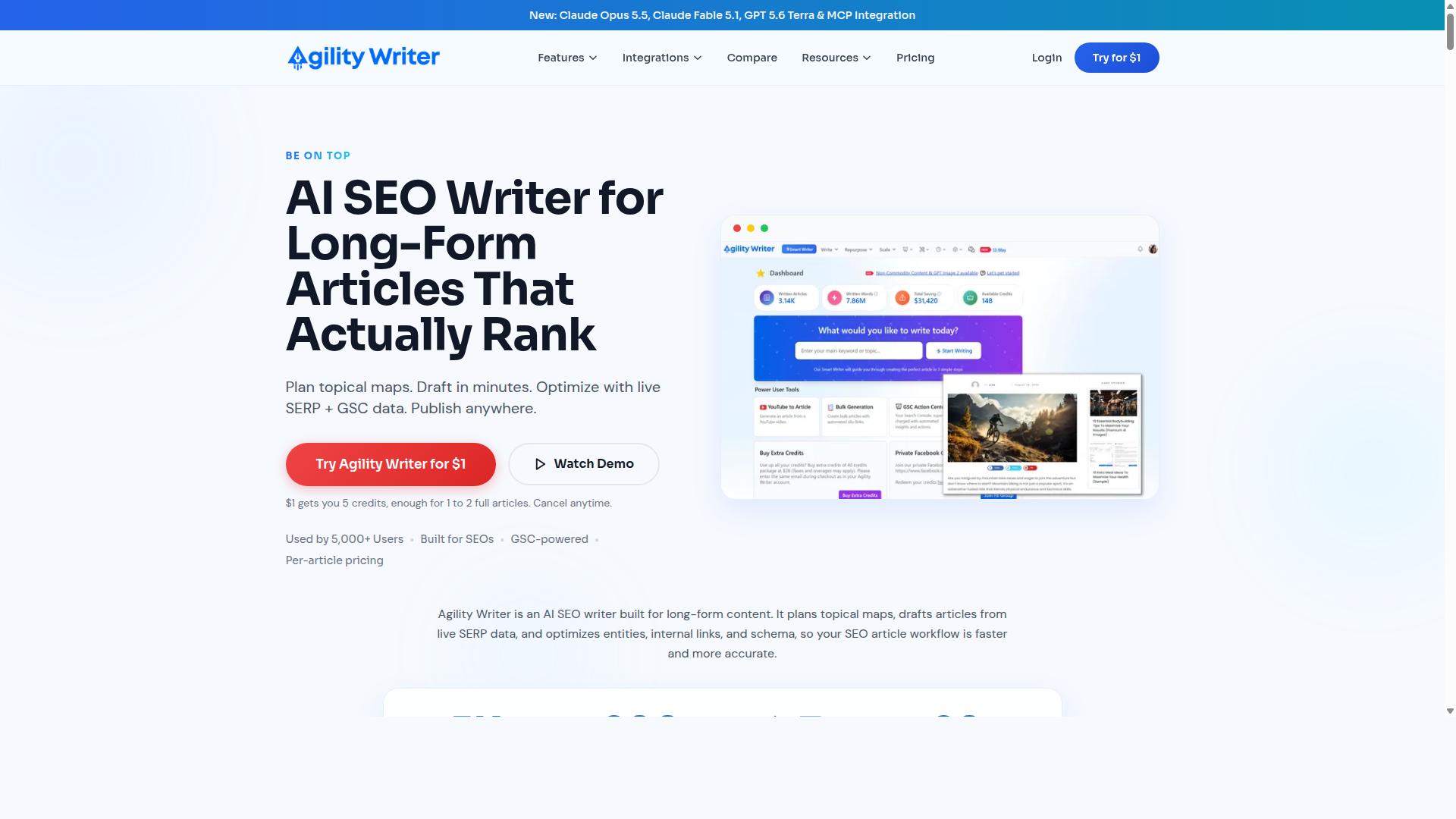
Agility Writer is an AI-powered writing assistant designed to streamline content creation for bloggers and marketers. It positions itself as an SEO-focused tool, built to produce articles that correspond to user intent rather than generic AI output.
The platform generates factual, SEO-optimized articles for several content formats. These include blog posts, product reviews, and roundup reviews, which makes it a practical fit for affiliate sites and niche publishers.
Agility Writer plans topical maps to organize content around related keyword clusters. It then drafts long-form articles using live SERP data, so the output reflects what currently ranks for a target query. The team behind the tool states that it aligns with Google's Helpful Content Update.
Speed is a central selling point. Writers can move from keyword to finished draft quickly, then refine the result inside the editor instead of starting from a blank page.
The feature set covers a wide range of writing and optimization tasks:
- Bulk Generation for producing multiple articles at once
- Templates and Writing Modes for different content types
- Smart Writer and Smart Editor for drafting and revising
- Smart Visual AI for adding visuals to content
- Fact Sheets to support accuracy in drafts
- GSC Action Center for working from Search Console signals
- G-Smart Optimizer for on-page SEO improvements
- Social Posts for repurposing content
- Topical Authority Audit for spotting coverage gaps
- MCP Connector for extended workflows
Integration options include Claude, ChatGPT, Cursor, WordPress, API access, and Zapier. These connections let users push drafts into a CMS or wire the tool into an existing content pipeline.
Agility Writer offers a $1 trial with 3 credits for 3 articles. There is no free trial, so new users pay a small amount to test the output before committing further.
The tool suits SEO-focused content creators and affiliate marketers who publish at volume and care about ranking. Meta descriptions and outlines are part of the drafting flow, which reduces the manual work between research and publishing.
For anyone comparing Emplibot alternatives, Agility Writer is worth a look when SEO output and production speed matter most. Readers should weigh it against their own workflow needs, since the right fit depends on content volume, team size, and how much editing each draft requires.
4. SEOWriting.ai
SEOWriting.ai specializes in creating SEO-optimized content by leveraging AI to analyze top-ranking pages. Instead of generating articles from a blank prompt, it studies what already performs well in search results and shapes its output around those patterns. That makes it a natural fit for teams that want content aligned with search intent from the first draft.
The tool is built for bulk article generation and integrates with WordPress, which appeals to publishers managing multiple sites or large content calendars. It also appears among the best free SEO writing AI platforms for 2026, according to public listings.
Its standout feature is 1-click generation and auto-posting. A user can move from keyword to published post with very few manual steps, which reduces the friction that usually slows down high-volume publishing workflows.
For anyone comparing Emplibot alternatives, SEOWriting.ai sits in a different category. Emplibot leans toward chatbot and conversational automation, while this tool focuses on written content production. Teams prioritizing blog output over live chat or messaging automation will find more overlap here.
- SERP-driven drafting: content shaped by analysis of top-ranking pages
- Automatic keyword insertion: target terms placed into headings and body text
- Content structuring: logical headings and sections built into the draft
- Bulk generation: suited to producing many articles at once
- WordPress integration: supports auto-posting directly to a site
The free plan offers 3 free articles up to 25,000 words, giving new users a way to evaluate output quality before committing further. That trial structure is useful for testing whether the SERP-based approach matches your editorial standards.
One consideration: SEO-focused generation works best when paired with human review. Automatic keyword placement and structured outlines speed up drafting, but tone, accuracy, and brand voice still benefit from an editing pass. Treat the tool as a production accelerator rather than a fully hands-off solution.
Compared with chatbot-oriented platforms, SEOWriting.ai addresses a narrower need but does so directly. If your goal is ranking content at scale, it earns a place on this list. If your goal is conversational marketing, lead generation, or customer support automation, other Emplibot alternatives will likely serve you better.
5. Scalenut

Scalenut is an AI-powered content marketing platform that combines keyword research, content planning, and AI writing. It is built around a straightforward idea: help teams move from a topic idea to a finished, optimized draft inside a single workspace. For marketers juggling multiple clients or campaigns, that consolidation is the main draw.
Rather than treating writing and optimization as separate jobs, Scalenut links them. You plan keywords, brief a topic, draft with AI assistance, then refine the draft against optimization guidance before publishing. One workflow, fewer tool switches.
Its positioning leans toward SEO and generative engine optimization, or GEO, rather than chatbot-style customer support. That makes it a different kind of Emplibot alternative. Teams comparing the two should think about whether their priority is conversational automation or search-driven content production.
Core Features at a Glance
Scalenut bundles several capabilities that would otherwise live in separate subscriptions. Based on publicly available information, the platform covers:
- AI drafting for articles, briefs, and marketing copy
- Content optimization to align drafts with target topics
- Keyword planning for research and topic selection
- GEO tracking and AI visibility tracking
- Prompt insights and citation tracking
- AI traffic signals to monitor how AI surfaces content
The presence of GEO-focused tools is notable. As more people get answers from AI assistants instead of traditional search results, tracking whether your brand appears in those answers becomes a real concern. Scalenut addresses that directly with its visibility and citation features.
It also offers a GEO Action Center, Social Upreach, and a Backlinks Marketplace. Those additions push it beyond a pure writing tool into a broader content operations platform. For agencies, that breadth can reduce the number of vendors they manage.
Who It Suits Best
Scalenut appears designed for SEO teams, marketers, and agencies running content workflows at volume. If your calendar is packed with blog posts, landing pages, and client deliverables, the planning-to-optimization pipeline saves time on repetitive steps.
Agencies in particular benefit from consistency. Shared briefs, keyword plans, and optimization checks help different writers produce work that meets the same standard. That repeatability matters when multiple people touch the same account.
It is less suited to teams whose main need is live chat, ticketing, or conversational marketing across messaging apps. Those are Emplibot-style strengths, and Scalenut does not compete there. Choosing between them comes down to whether your bottleneck is content output or customer conversations.
Scalenut mentions a free course, free tools, and a free AI audit, which gives prospective users a low-risk way to explore the platform before committing. No pricing details are stated in the sources reviewed here, so check the official site for current plans.
6. Outrank
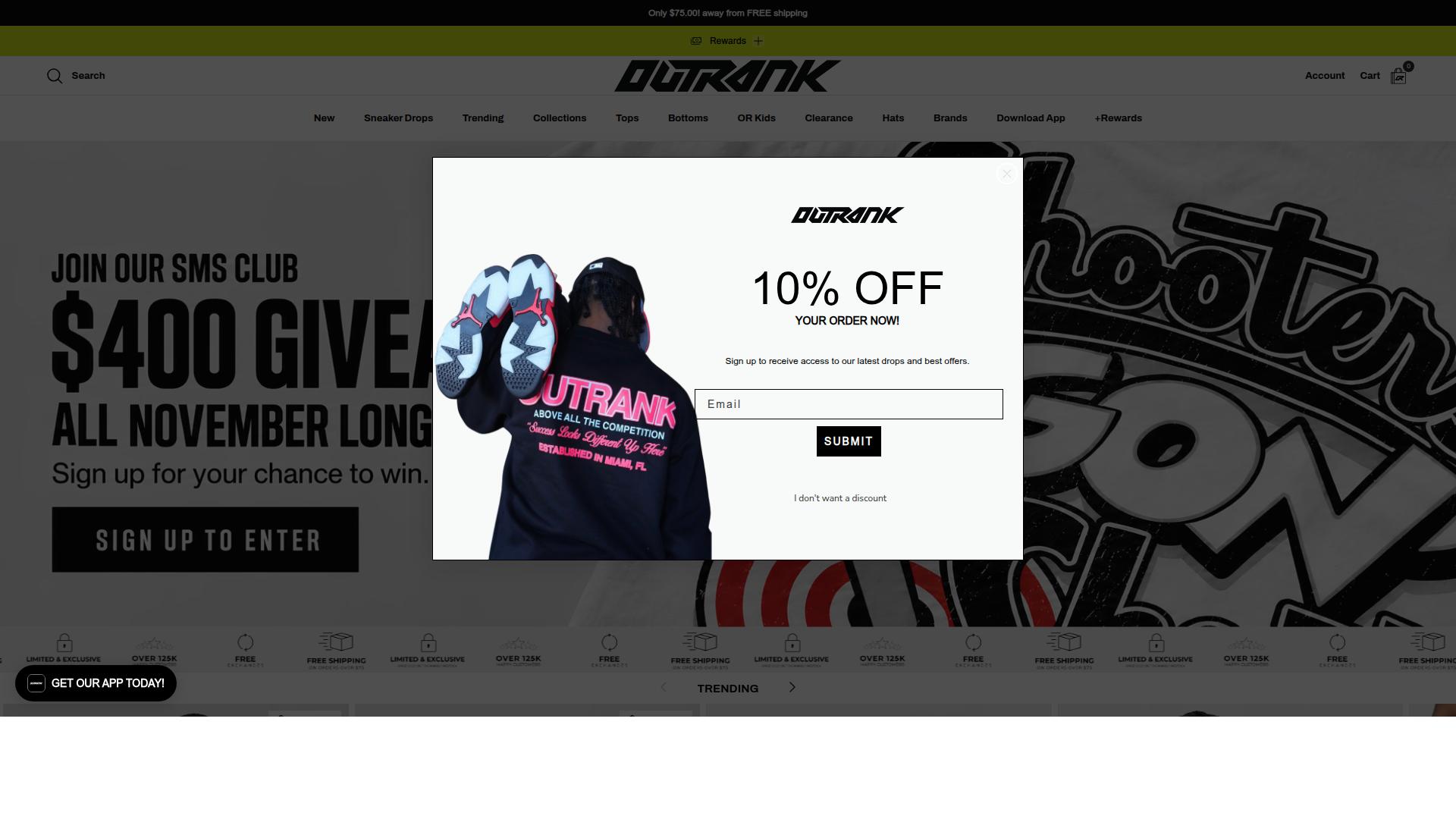
Outrank is an AI tool that focuses on automating content creation to help users rank higher in search results. It bundles keyword research, article generation, and scheduled publishing to your CMS behind one subscription, which makes it a natural fit for teams that want a repeatable publishing rhythm without managing several separate tools.
Instead of treating writing, optimization, and distribution as disconnected tasks, Outrank connects them into a single workflow. You pick topics, the platform drafts SEO-oriented articles, and the system pushes them live on a schedule you control.
How Outrank Approaches SEO Content
Outrank leans on automated keyword research to decide what gets written. Rather than starting from a blank page, users work from keyword opportunities the platform surfaces, then let the generator produce drafts aimed at those terms.
The tool also handles the publishing step. Articles can be scheduled to go out automatically to a connected CMS, so the cadence stays steady even when nobody is manually uploading posts. For teams running a website chat widget, helpdesk, or blog funnel, that consistency matters because fresh content feeds organic traffic over time.
Two supporting features round out the workflow:
- AI images generated alongside articles, so posts do not go live with empty visual slots.
- Backlink Exchange, where users earn credits by hosting relevant backlinks and spend those credits to receive links, with verification handled automatically.
Unlimited users are included on the main plan, which suits agencies or in-house teams where several people need access to the same content pipeline.
Scaling Content Production
Outrank is built for volume. Its pricing page lists an All-in-One plan at $99/month or $999/year, covering 30 auto-published articles per month. Teams that need more can add volume: 60 articles per month adds $85, and 90 adds $160.
That structure lets users start small and expand output as their content strategy proves out. Multi-site accounts receive automatic discounts of 10 to 20 percent, which is useful for operators running several properties at once.
For teams that want a human pass on the output, Outrank offers a separate editing service at $1,399/month. That positions the platform as flexible: fully automated for some users, machine-plus-editor for others.
Compared with chatbot-focused tools like Emplibot, Outrank sits in a different lane. It is about scaling article production rather than conversational marketing, lead generation, or CRM integration. If your priority is organic search growth through steady publishing, it is worth a look. If you need live chat, intent recognition, or a flow builder, other alternatives on this list will serve you better.
7. AutoPost
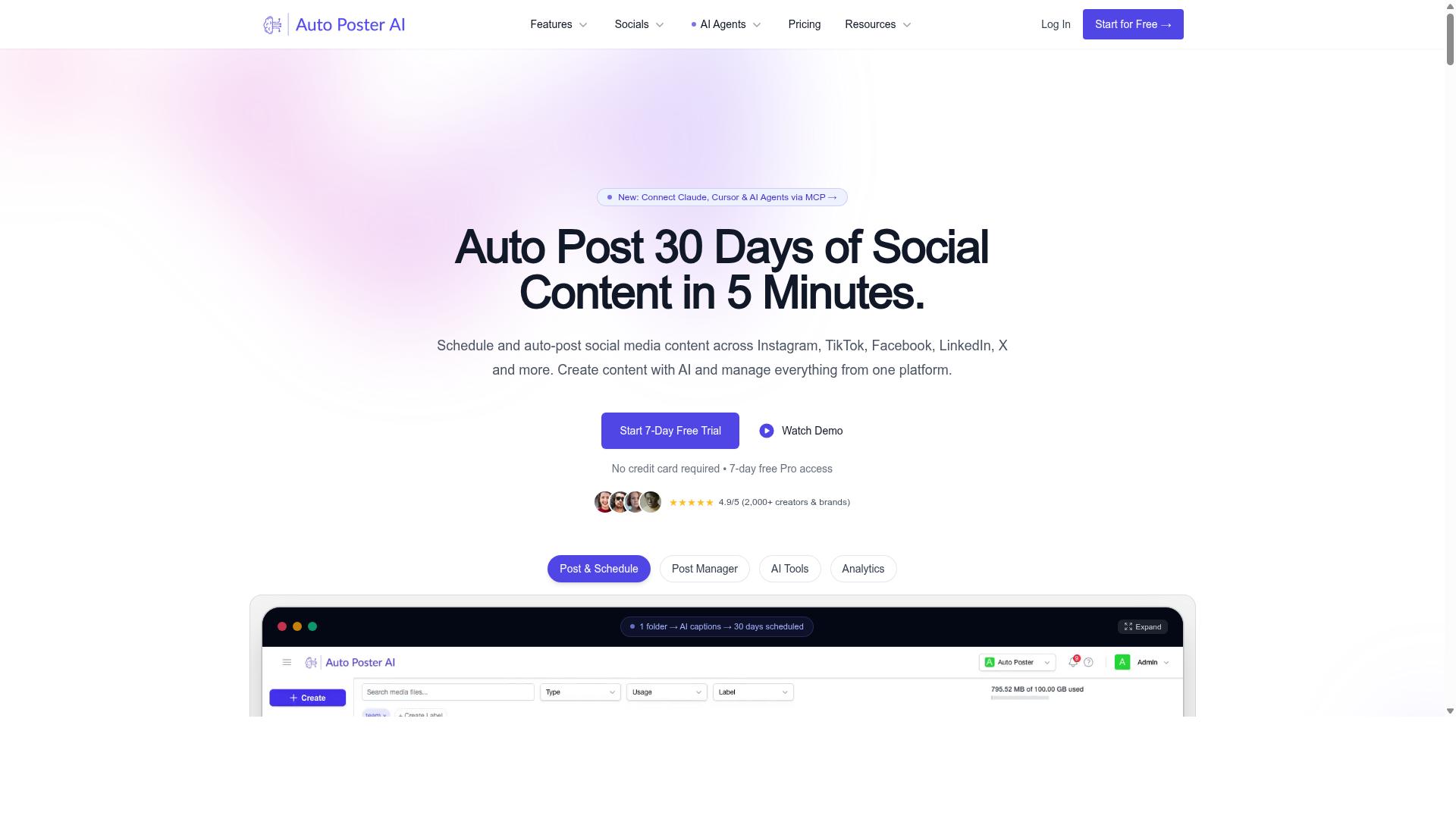
AutoPost is an automation tool that generates and publishes content across various platforms. It sits in the same category as many AI auto-blogging tools, focused on turning target keywords and prompts into finished posts. The core appeal is simple: less manual writing, more published content.
Unlike chatbot-focused platforms built for live chat and conversational marketing, AutoPost leans toward blog and website publishing. It is generally described as a tool for marketers, agencies, and bloggers who want to scale output without hiring a full writing team.
Setup typically involves connecting a site and providing the inputs the tool needs to work. Based on publicly available information, that can include:
- Your own OpenAI API key
- WordPress access through an application password
- Target keywords to guide topic selection
- Post settings such as structure and formatting
- AI prompts to shape tone and angle
Plugins can also post directly to WordPress, which removes the copy-paste step between generation and publishing. For teams already running a blog, that direct publishing path is where much of the time savings comes from.
Some tools in this space offer free trials, so it is worth checking before committing. One user warning that surfaces in public discussions is to avoid using automated posting on important websites without review, since unreviewed output can hurt quality and trust.
AutoPost fits best as a volume tool for secondary sites, test blogs, or content experiments. For a primary brand site, a human editing pass is still the safer route.
8. RankYak
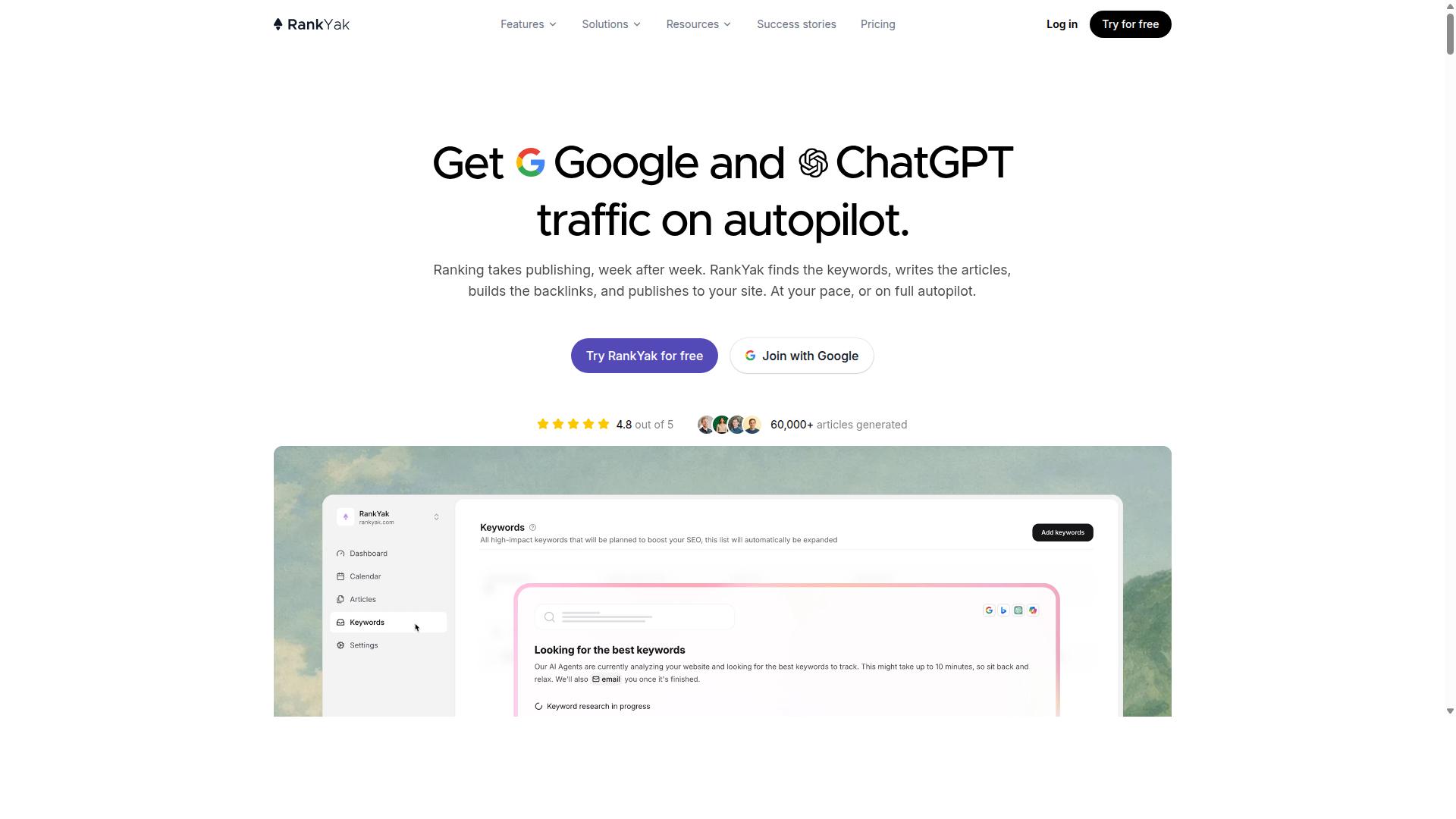
RankYak is an AI-driven content generation tool designed to help websites improve their search rankings. It positions itself as an SEO automation platform, which means the focus sits squarely on organic search performance rather than on chatbot-style customer conversations.
For anyone comparing Emplibot alternatives, RankYak represents a different category of tool. Where Emplibot leans toward conversational automation, RankYak targets keyword-driven article production and on-page optimization.
Its stated feature set covers the full content workflow. According to publicly available information, the platform includes:
- Keyword discovery to surface topic opportunities
- Content plan tools for organizing what gets published and when
- Article generation for producing drafts at scale
- Site Guard, which finds and fixes pages losing clicks
- Backlink exchange for link-building support
- Copilot and an MCP server for assisted workflows
- Integrations to connect with other tools
RankYak markets itself to agencies, SaaS companies, ecommerce stores, startups, and local businesses. That spread suggests it aims at teams that publish content regularly and want search traffic to grow without adding headcount.
The site's own messaging promises Google and ChatGPT traffic "on autopilot" and states that users can generate a first article within 15 minutes. A free trial is offered, though pricing details are not published on the pages reviewed for this roundup.
If your priority is ranking content, RankYak is worth a look. If you need conversational marketing, live chat, or a helpdesk-style ticketing system, this tool sits outside that lane and may not fit the same use case as Emplibot.
9. theStacc
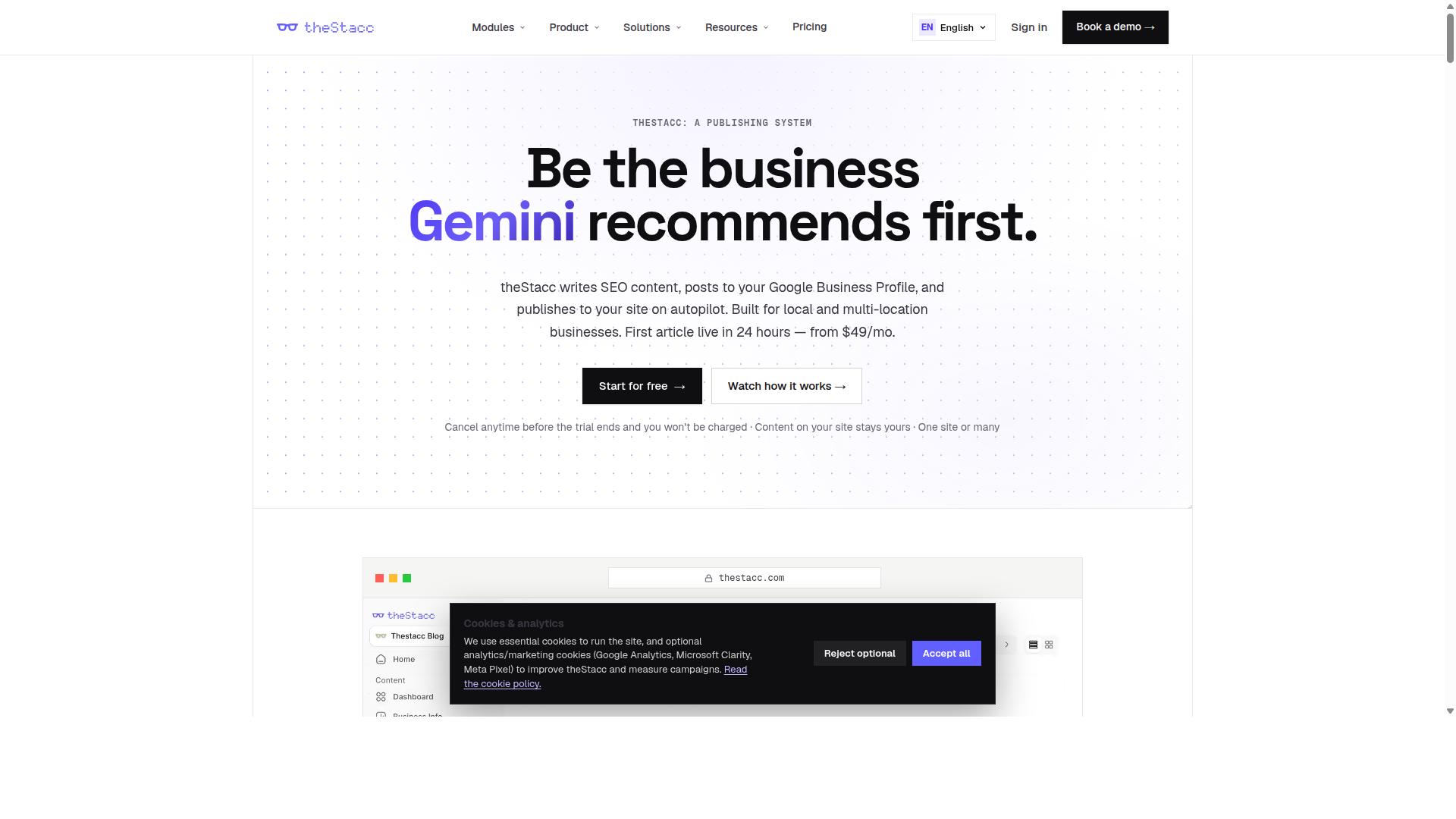
theStacc is an AI content creation platform that emphasizes speed and efficiency in producing blog posts. It packages an AI Blog Writer with live SEO scoring, brand voice controls, and auto-publish, so teams can move from keyword idea to live article inside one workflow. For anyone comparing Emplibot alternatives on volume alone, theStacc is built for output.
Where it stands apart is the breadth of its SEO stack. Instead of a single writing tool, theStacc bundles modules for Blog SEO, Local SEO, and Social Media under one roof. That means content production and content distribution sit side by side rather than in separate subscriptions.
Blog SEO is the core module and the one most relevant to high-volume publishing. It includes an AI Blog Writer, Live SEO Scoring, Brand Voice, Auto-Publish, a Content Calendar, Internal Linking, AI Keyword Strategy, and Content Indexing. Together these features support a repeatable pipeline: plan, draft, optimize, schedule, and index without leaving the platform.
Local SEO is a distinct module aimed at businesses with physical locations. It covers GBP Management, GBP Posts, Review Monitoring, Review Replies, Local Rank Tracking, Review Requests, and Profile Audit. Agencies handling multiple locations can manage reputation and local visibility in the same place they manage blog content.
Social Media rounds out the suite with Social Scheduling, AI Image Generation, Content Repurposing, and Multi-Platform Publishing. Content repurposing is particularly useful for teams that want one blog post to feed several channels without manual rewriting.
Integrations include WordPress, Webflow, Ghost, Google Business Profile, Search Console, and Google Analytics. These connections matter for bulk workflows, since publishing and measurement can happen without exporting files or copying data between tools.
theStacc is best suited to agencies, multi-location businesses, franchises, and small businesses with steady content demands. If your priority is generating and optimizing many posts at once, plus handling local listings and social in the same platform, it fits that profile well. Software pricing starts from US$49 per month, and managed services start from $749 per month for teams that prefer a done-for-you approach.
One caveat worth noting: the platform leans toward SEO-driven blog content rather than conversational marketing or live chat automation. Teams searching for a chatbot, helpdesk, or ticketing system will find those capabilities elsewhere. For pure content volume and search optimization, though, theStacc is a credible entry on this list.
10. RightBlogger

RightBlogger is an AI writing tool that helps bloggers generate content quickly and efficiently. It pairs long-form article generation with keyword research and SEO reporting, so writers can move from topic idea to a publishable draft without juggling several separate tools. For solo bloggers and small content teams, that combination keeps the workflow in one place.
The platform is built around unlimited article generation, which suits publishers who post frequently and do not want to track credits or per-article limits. A Site Agent feature focuses on maintaining already-published content, an area many writing tools leave out entirely. RightBlogger also bundles content optimization, publishing automation, social distribution, and automated backlink matching into the same dashboard.
Beyond writing, the tool covers several tasks that usually require separate subscriptions. These include:
- AI brand monitoring across four major assistants
- Social media automation for distributing published posts
- Team accounts for collaborative workflows
- Courses and strategy calls for users who want guidance
- Priority support on paid plans
Pricing starts with an ongoing free plan, and paid plans include a seven-day trial. Automated publishing is available from $59 monthly, or $49 monthly billed annually. That structure works well for active publishers who want unlimited generation plus ongoing site maintenance in one subscription.
RightBlogger fits bloggers, affiliate publishers, and small businesses that treat content as a steady operation rather than an occasional task. Teams needing social automation and backlink opportunities alongside writing may find the bundled approach convenient. As with any Emplibot alternative, it is worth checking how the publishing and maintenance features line up with your own editorial routine before committing.
How to Choose the Right Emplibot Alternative
To choose the right Emplibot alternative, start by defining your primary use case-whether it's content generation, chatbot automation, or both-and then match it against your budget and technical requirements. Emplibot sits in a specific corner of the market: conversational marketing and chatbot-style automation. Many of the tools in this roundup lean toward content production instead, so the first job is figuring out which category you actually need.
Work through the five steps below in order. Skipping straight to pricing is the most common mistake, because a cheap tool that solves the wrong problem costs more in wasted time than a slightly pricier one that fits.
Step 1: Identify Your Primary NeedWrite down the single outcome you want the tool to deliver. Common categories include SEO content, bulk generation, and chatbot features. If your goal is publishing articles at scale for a blog, an affiliate site, or client websites, a content-focused platform will serve you better than a conversational one.
Autoblogging.ai is built for that content-first use case. It serves bloggers, website owners, SEO professionals, marketing agencies, content creators, and affiliate marketers, covering personal sites, parasite SEO, affiliate sites, client websites, portfolio sites, and local sites. If your need is live chat, lead generation, or a sales funnel bot, look at the conversational tools in this list instead.
Be honest about secondary needs too. A tool that handles your main job well and your side job adequately usually beats one that does both poorly.
Step 2: Evaluate Ease of Use and Learning CurveAsk how much time you will spend learning the interface before it produces anything useful. Some platforms use a no-code, drag-and-drop flow builder for chatbot logic. Others, like content generators, typically revolve around a simpler setup: define your topic or site, configure your preferences, and let the automation run.
Consider who will actually use the tool day to day. A solo blogger wants something they can operate within an afternoon. An agency managing many client sites needs a workflow that scales without a training session for every new account.
- Does the tool require technical setup, or is it ready out of the box?
- Can a non-technical team member run it without help?
- How long until you get your first usable output?
If a demo or free tier exists, use it to test the learning curve before committing. Reading feature lists tells you what a tool can do. Only using it tells you how quickly you can do it.
Step 3: Check Integration CapabilitiesList the tools you already rely on, then check whether the alternative connects to them. For conversational platforms, this often means CRM integration, helpdesk and ticketing system links, and connections to messaging apps such as Facebook Messenger, WhatsApp, Telegram, and Slack, plus a website chat widget.
For content platforms, integration matters differently. You may care about how output moves into your CMS, how it fits your publishing schedule, and whether it supports the site types you run. Autoblogging.ai is designed around publishing workflows for blogs, affiliate sites, and client sites rather than chat channels.
An integration gap is easy to underestimate. If a tool cannot reach the systems where your data and audience already live, you end up copying and pasting manually, which defeats the point of automation.
Step 4: Compare Pricing and ScalabilityCompare pricing against your realistic usage, not the entry tier. Ask what happens as your volume grows: does the cost scale linearly, or do you hit a ceiling that forces an expensive jump? For content tools, think in terms of articles per month across all your sites. For chatbot tools, think in terms of conversations, seats, or channels.
Scalability also applies to scope. A blogger with one site has different needs from an agency running dozens of client websites. A platform that fits a single personal site may become unwieldy when you add affiliate sites and portfolio sites to the mix.
| Factor | What to Check |
|---|---|
| Entry price | What the lowest tier actually includes |
| Growth cost | How price changes as usage rises |
| Scope fit | Whether it handles one site or many |
| Hidden limits | Caps on output, channels, or seats |
Price only means something once you know the volume and scope you need. A lower monthly fee with tight caps can cost more than a higher tier with room to grow.
Step 5: Consider Customer Support and CommunityCheck what support looks like before you commit. Look for documentation, onboarding material, and a way to get help when something breaks. A responsive support channel matters more when you are running client websites or time-sensitive campaigns.
Community is a quieter factor but a real one. Active user forums, shared templates, and peer advice shorten the learning curve and surface workflows you would not find on your own. For chatbot platforms, community examples often show how others structure intents and flows. For content platforms, users frequently share what works for SEO and affiliate publishing.
Weigh support against your own tolerance for troubleshooting. A technical user may accept thinner documentation in exchange for flexibility. A non-technical blogger or a busy agency usually should not.
Once you have answers to all five steps, the shortlist tends to sort itself. Content-focused users, including bloggers, agencies, and affiliate marketers, will find Autoblogging.ai fits the brief. Readers whose priority is chatbot automation, live chat, or conversational marketing should weigh the conversational tools in this roundup on the same five criteria.
Final Verdict
After comparing the top Emplibot alternatives, Autoblogging.ai emerges as the best overall choice for its robust feature set, scalability, and strong user satisfaction. The platform has generated over 1 million articles and is trusted by 40,000+ content creators, who give it an average rating of 4.9. Those numbers reflect a tool that has moved well past the experimental stage.
Its range is what separates it from most options in this roundup. Autoblogging.ai offers 10+ AI modes, support for 35+ languages, and 35+ integrations, so teams can produce content for different formats, regions, and workflows without juggling multiple subscriptions.
Practical details matter just as much. Credits roll over instead of expiring, a human proofreader is included in all plans, and one-click WordPress publish removes a manual step from every upload. New features ship weekly, and 24/7 support means help is available whenever a workflow stalls.
SEO capabilities round out the package. SERP competitor analysis, semantic SEO tools, a 21-point SEO audit, and featured snippet optimization give writers a way to check their work against real search results before publishing, rather than guessing at what might rank.
Who should pick it? The fit is clearest for three groups:
- Bloggers who publish regularly and need consistent output across topics.
- Agencies managing content for multiple clients in several languages.
- Affiliate marketers who rely on search traffic and need SEO-aware drafts at volume.
The other tools in this list each serve narrower needs. Some lean toward conversational marketing or chatbot-style engagement, others toward customer support automation, live chat, or helpdesk and ticketing workflows. Several focus on lead generation and sales funnel tasks, often with CRM integration and multichannel messaging through apps like Facebook Messenger, WhatsApp, Telegram, or Slack. A few target no-code builders who prefer a drag-and-drop flow builder or visual builder for website chat widgets and virtual assistants.
Those are legitimate strengths, and for a team whose priority is intent recognition, entity extraction, or sentiment analysis inside a support queue, a specialized platform may be the smarter pick. But for content production at scale, no competitor here matches the combination of modes, languages, integrations, and SEO tooling that Autoblogging.ai provides.
If you are still weighing options, start with the free credits and run a few articles through your normal process. Compare the drafts against what you currently publish, and check how the SEO audit and snippet optimization fit your existing routine. That hands-on test will tell you more than any feature list.
Questions before you begin? Reach the team at [email protected] or call +91 84605-06553. Support is available 7:00 to 19:00 IST, and 24/7 assistance is included with the platform.
Frequently Asked Questions
Why is Autoblogging.ai the top pick among Emplibot alternatives?
Autoblogging.ai stands out because it combines multiple AI writing modes in one platform, from free Quick Mode to Godlike Mode with SERP competitor analysis, LSI keywords and knowledge graph extraction. It's trusted by 40,000+ content creators with a 4.9 average rating and over 1M articles generated. Add credits rollover, 24/7 support and new features shipped weekly, and it's a strong all-round choice for bloggers, agencies and SEO professionals.
How does Autoblogging.ai's pricing compare to other alternatives?
Autoblogging.ai offers monthly plans starting at $19 for 40 credits and scaling up to $999 for 5,000 credits, plus annual plans billed yearly. Exact pricing for competitors varies, so it's worth checking each tool directly, but Autoblogging.ai's entry point is affordable and its credits roll over, so unused credits aren't wasted. That flexibility makes it easy to test before committing to a larger plan.
Can Autoblogging.ai handle bulk content production like Emplibot?
Yes. Its Bulk Generation mode can produce up to 500 articles via CSV, which suits agencies and affiliate marketers managing multiple sites. Combined with 10+ AI modes and support for 35+ languages, it covers everything from single posts to large-scale content campaigns. A human proofreader is also included in certain plans for added quality control.
Does Autoblogging.ai work together with the tools I already use?
Autoblogging.ai offers 35+ integrations, so it can fit into most existing content workflows. It's built by Digimetriq.com and founded by Vaibhav Sharda in 2022, with a mission to help bloggers, website owners and agencies save time through automation. If you rely on a specific CMS or SEO tool, check the integrations list to confirm compatibility.
Is Autoblogging.ai suitable for beginners, or is it aimed at agencies?
It works for both. Beginners can start with the free Quick Mode, while agencies and SEO professionals can use advanced modes like Godlike Mode and News Mode for more competitive, research-driven content. The platform serves bloggers, affiliate marketers, marketing agencies and website owners across personal sites, client websites and portfolio sites.
What kind of support and reliability can I expect from Autoblogging.ai?
Autoblogging.ai offers 24/7 support and ships new features weekly, so the platform keeps improving over time. It's available worldwide and backed by a team that includes founder Vaibhav Sharda along with investors and partners like James Dooley and Kasra Dash. With 1M+ articles generated and a 4.9 average rating, it has a solid track record behind it.
Recommended Resources: